Showing posts with label the enchantress of florence. Show all posts

Monday, May 31, 2010

itchiest love story ever

this is a cop out post because i don't have the energy for the post that's percolating in my mind grapes. 


the following is an excerpt from The Enchantress of Florence, which yes, I'm still reading. i'm telling you about it because it's the perfect love story/metaphor, and it made me giggle. wanna hear it? here it goes:


That night the emperor dreamed of love. In his dream he was once again the caliph of Baghdad, Harun al-Rashid, wandering incognito, this time, through the streets of the city of Isbanir. All of a sudden he, the caliph, developed an itch that no man could cure. He returned swiftly to his palace in Baghdad, scratching himself all over throughout the twenty-mile journey, and when he got home he bathed in asses' milk and asked his favorite concubines to massage his whole body with honey. Still the itch drove him mad an no doctor could find the cure, though they cupped him and leeched him until he was at the very gates of death. He dismissed those quacks and when he regained his strength decided that if the itch was incurable the only thing to do was to distract himself so thoroughly that he stopped noticing it.
He summoned the most famous comedians n his realm to make him laugh, and the most knowledgeable philosophers to stretch his brain to the limit. Erotic dancers aroused his desires and the most skillful courtesans satisfied them. He built palaces and roads and schools and race tracks and all of these things served well enough but the itching continued without the slightest sign of improvement. He has the whole city of Isbanir placed in quarantine and fumigated its gutters to try to attack the itching plague at its source but the truth was that very few people seemed to be itching as badly as he was. Then on another night when he went cloaked and secret through the streets of Baghdad he saw a lamp at a high window and when he looked up he glimpsed a woman's face illuminated by the candle so that she seemed to be made of gold. For that single instant the itching stopped completely but the moment she closed her shutters and blew out th candle it returned with redoubled force. It was then that the caliph understood the nature of his itch. In Isbanir he had seen that same face for a similar instant looking down from another window and the itching had begun after that. 'Find her,' he told the vizier, 'for that is the witch who has hexed me.'
Easier said than done. The caliph's men brought seven women a day before him on each of the next seven days, but when he obliged them to bare their faces he saw at once that none of them was the one he sought. On the eighth day, however, a veiled woman came to the court unbidden and asked for an audience, saying she was the one who could ease the caliph's pain. Harun al-Rashid had her admitted right away. 'So you are the sorceress,' he cried. 'I am nothing of the sort,' she answered him. 'But ever since I caught a glimpse of a man's hooded face in the streets of Isbanir I have been itching uncontrollably. I even left my hometown and moved here to Baghdad hoping the move would ease my affliction, but it was no use. I have tried to occupy myself, to distract myself, and have woven great tapestries and written volumes of poetry, all to no avail. Then I heard that the caliph of Baghdad was looking for a woman who made him itch and I knew the answer to the riddle.'
With that she boldly cast off her veiling garment and at once the caliph's itches disappeared completely and were replaced by an entirely different sentiment. 'You too?' he asked her and she nodded. 'No more itching. Something else instead.' 'And that, too, is an affliction no man can heal,' said Harun al-Rashid. 'Or, in my case, no woman,' the lady replied. The caliph clapped his hands and announced his forthcoming marriage; and he and his Begum lived happily ever after, until the coming of Death, the Destroyer of Days.
Such was the emperor's dream. 


Monday, May 17, 2010

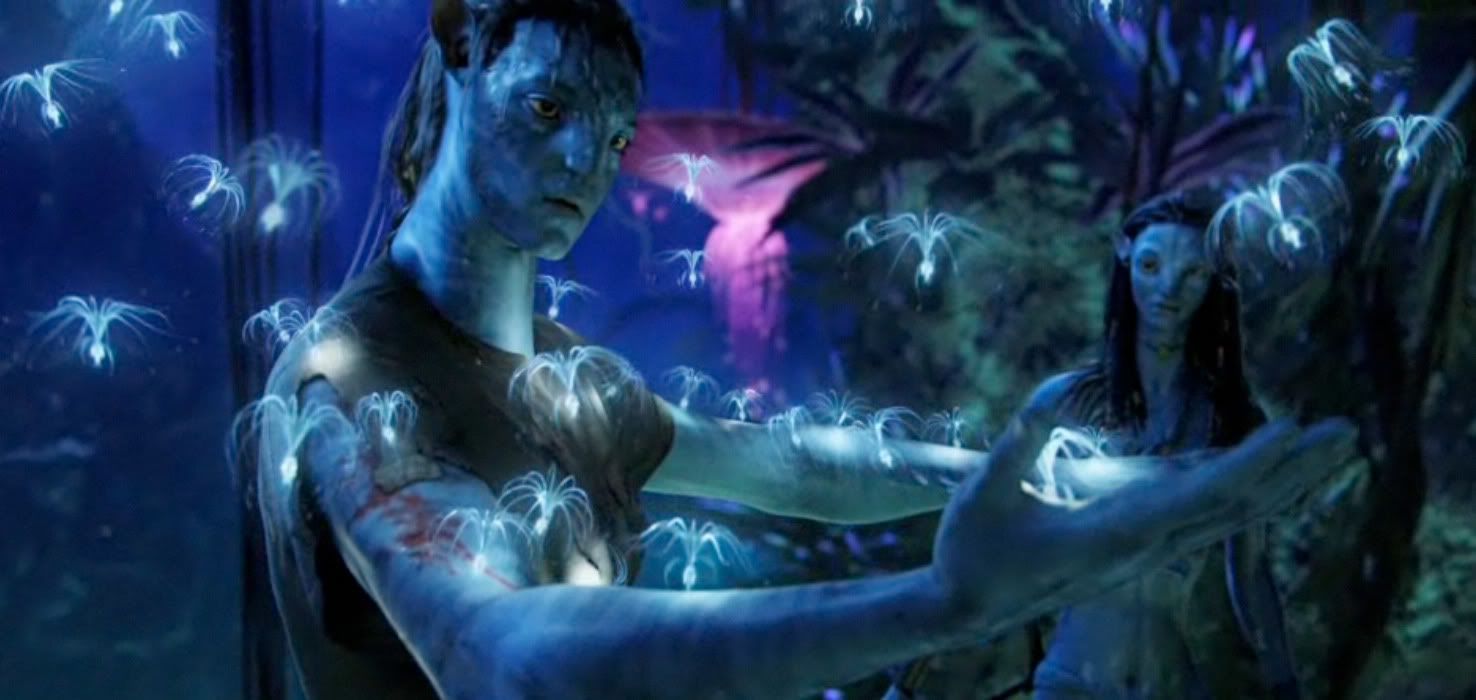
hey. avatar is fern gully. and hook.

lacey just saw avatar and was text-complaining at me the whole time about how every inch of it is ripped off. doi. but haha, fooled you, i'm not going to talk about something that obvious except for right now when imma go 
RU-FI-OOOOO!!
ok, but i love lacey and she's right. and that's it. it's just that she reminded me of (anyone starting to think my blog should be called 'that reminded me of'? im so predictable. hey, that's perfect for this post!) not only one of the books i'm currently reading, The Enchantress of Florence, but upon further reflection, a book i read in college (surprise!) called The Manuscript Found in Saragossa. 


now don't get me wrong. i do not recommend reading 'Saragossa,' for it is a pernicious beast and will slay you in 100 pages or less, have no DOUBT. plus, if you make it 100 pages, you won't even feel very accomplished because it's about a bajillion pages long. i mean it's good, just takes a looong time to get through. crazy old timey polish guy. i'll expound, don't worry.


i do, however, so far, recommend the 'Enchantress.' now i bet you're thinking 
what the bleep are you talking about, lady; how are avatar, fern gully, rufio, a polish tome, and a super pomo rushdie novel AT ALL similar?
well i'm glad you (i) asked! 'member carl jung? (noooo, she introduced another character! shut up.) WELL, he blathered (like so many of us do, but he was way smarter n cooler) about how there are no actually new stories. in fact, vonnegut brought up the same point in A Man without a Country, in his pretty little graph proving that hamlet and cinderella were the same story (man, i love that guy. and hamlet). ok, here comes the quintessence. 


though i'm only halfway through Rushdie's Enchantress (that's what he said?), i've begun to notice a golden thread. would it be contradictory to call it blatant nuance? anywho. the narrative lazes back n forth in time/history and here n there across continents, catching you up on all the "pertinent" information to current circumstances. a dangerous little game, i might add. but here's where the anvil hit me (i know it's long, but this book is so beautifully choreographed that i hafta give you this much):
'The question of kingship,' the emperor said after a time, 'concerns us less and less. Our kingdom has laws in place to guide it, and officials worthy of trust, and a system of taxation that raises enough money without making people unhappier than is prudent. When there are enemies to defeat we will defeat them. In short, in that field we have the answers we require. The question of Man, however, continues to vex us, and the problem of Woman, almost as much.'
'It is in my city, sire, that the question of Man has been answered for all time,' Mogor said. 'And as to Woman, well, that is the very sum and matter of my story. For, many years after the death of Simonette the first enchantress of Florence, the foretold second enchantress did indeed arrive.'
 some things i noticed in that excerpt (end of chapter, btw, so i could do this) that gave me pause:


  1. not particularly relevant to my point today but... Man is a question, Woman is a problem (can't say i disagree, but still, HEEEEY!!)
  2. this bit is already within a story being told in the novel - summing up a previously told story but preparing the listener/character/reader for the new story.
  3. aside from the biblical undertones of resurrection (one of these things is not like the other), it's clearly pointed out in this cliffhanger that something important that happened before is happening/happened/will happen again. not like a week ago, a year ago, or a decade ago, but within history (hey, not fair, define history! no.). 


don't worry, i wont address all of those individually. just wanted to throw those thoughts at you right after you'd read the bit. #s 2 and 3 basically pummel you with my point. ready for further punches? no one cares, here they come.


Saragossa would break your foot if you dropped it. Jan Potocki (po-tot-skee. that's right.) wasn't sure his reader would get it within the first 15 iterations or so, so he just RAN WITH IT. apparently people were pretty bored in the 18th century. naw, i'm bein mean, there is a reason he has so many stories, but man, it's like when i read catcher in the rye and i was yelling at the book in my lap,
It's not symbolism if you saturate me with it and then explain it!
dont get me started on that book. anywho. the reason i've thrown this book at you is because its point is the reiteration of the tale in a new way/the lack of any new story, and the method is the whole story within a story action. it's really pretty cool. main character is on a journey, meets some dude, dude tells him a story - within dude's story is another dude who tells a story, and so on. at one point it gets something like 18 levels "deep." i kept notes to keep track at one point and then just gave up n said 'I GET IT.' 


kicker: all of the stories and substories ended with the same scene (a troubling one). this spiraling labyrinth of storytelling begins to make the reader feel a bit insignificant in the grand scheme of things. like everything has happened before and history teaches us nothing and you are not a beautiful unique snowflake. 


same point i'm beginning to get from Enchantress. though certainly not the only one. and, granted, it's possible that i read existentialism into urrrvrything. but hear me out. in Enchantress we have the setting of mid-1500s Florence and Persia, but we also have characters recanting their histories (because decent was a pretty big deal), along with branching plot lines (i go here, you go there, ready, GO!), AND historical figures (*cough* Machiavelli *cough*). 


this is not a historical fiction novel, though - unless you'd call Kill Bill historical fiction because you learned something about Hattori Hanzo. the point is the repetition, the existence of archetypes, and the unfortunate fact that, no, there is nothing new in stories. it's also important to note that i use the term stories to refer to everything that happens. your life is a story. we add plot to everything. 'guy walks into a bar.' get it?


also, more important to note, there are infinite ways to tell a story. just because there will inevitably be a hero doesn't mean your story has been done before. in Enchantress, it's sometimes hard to tell who is even narrating at any given point: it could be a character in the 'present' of the novel, or maybe is a character within his story, or he's retelling a story someone told him so the lines are blurred, or maybe its just your good old omniscient narrator who's benevolent enough to give you everyone's perspective in the scene (a little jarring, but awesome).


it doesn't have to be alienating, distancing, and minuscule-feeling-making (i'll hyphenate what i please to make a point). this existence of the same plot, characters, and outcomes in so many stories from so many time periods across so many continents can be exhilaratingly unifying. alas, my point. humanity. narrative is human nature. it is universal. history, fiction, even nonfiction, follows a curve the reader can follow - aka, relate to. without verging on the collective unconscious, let me just say...


there are no universal truths. except stories.

Friday, March 26, 2010

enchanting

just re-started reading salman rushie's the enchantress of florence. (i got about 50 pages in a few months ago and managed to neglect the act of reading for some time due to .. life.)

i must say, it only takes about a sentence for this book to creep back under my skin and make me grin. the mind grapes start juicing and i get all kinds of comfy; sinking in for the long haul. even if the story were garbage (which it isn't), the prose is beautiful. the philosophical musings interspersed so seamlessly with character and setting development that you forget you're reading a story.

don't worry, no spoilers here, but i must set up the following AWESOME quote by saying that the emperor, despite his palace full of concubines, has imagined himself up a wife. she's 'imaginary.' and the this quote is spoken by her speaking to him:

when a boy dreams up a woman he gives her big breasts and a small brain. when a king imagines a wife he dreams of me.

that quote hit me like a hammer. i immediately reached for my pen. probably because it speaks to the boring desirability of a well-endowed woman who longs for nothing but to please a man, versus the unattainability of a strong, questioning, intellectual woman.

another, you ask? ok. this one is dear to my heart for obvious reasons:

witchcraft requires no potions, familiar spirits, or magic words. language upon a silvered tongue affords enchantment enough.

chew on that.